Job Opportunities

Research Proposals: Housing in Latin America

Context

Housing is recognized as a fundamental human right and has direct impacts on multiple
dimensions of well-being, including health, subjective well-being, labor mobility, and
poverty reduction. Although the countries of Latin America and the Caribbean have made
substantive progress in the last decades in terms of structural quality and access to basic
services, significant challenges remain: high rental costs for lower-income households,
constraints on the supply of formal housing, informal settlements, and limited access to
financing. The housing deficit reflects both structural supply-side problems—such as rising
land prices, insufficient service coverage, and limited territorial planning—and demand-
side constraints stemming from inequality and low incomes.

CAF has positioned housing as a strategic priority through the development of its 2023–
2026 Housing Strategy, which seeks to improve access to adequate housing, especially for
vulnerable populations, while ensuring attributes such as durability, urban integration,
security of tenure, and affordability. A central pillar of this strategy is the generation of data
and knowledge, given the region’s historical deficit of information and studies on housing
markets and the evaluation of housing policies.

This call aims to support research that generates rigorous and policy-relevant evidence,
with special interest in studies of policies improving access to housing by low-income
families.

Objective

Through this call, CAF seeks to fund research that provides original and rigorous empirical
evidence on housing markets and housing policies in Latin America and the Caribbean.

In total, up to five research projects will be funded according to the following criteria:

  • Up to 3 projects on topics of housing markets and housing policy in Latin America and the caribbean (see non-exhaustive list below). The selection of these 3 projects will prioritize academic contribution. They may or may not include the study or evaluation of specific policies. They will receive US$ 20.000 and be invited to present their progress at the 2026 workshop of LACEA’s Urban Economic Association LAURBAN to be held in Montevideo in December 2026. Travel and accommodation costs will be covered for one author per selected paper. These projects must produce a paper to be published after 16 months in CAF Working Papers series.
  • Up to 2 projects evaluating specific housing programs in Latin America and the Caribbean. The selection of these two projects will prioritize policy relevance and a plausible causal study of the impacts of a housing policy or housing infrastructure intervention (i.e. water, sanitation, trash collection, etc) in a country of Latin America and the Caribbean. These projects will receive US$ 15.000 and must produce a paper to be published in CAF Policy Papers series after 16 months.

Priority Topics

Proposals may focus on the following non-exhaustive list of topics:

Rental Markets

  • Regulatory frameworks, formalization costs, institutional barriers.
  • Evaluation of public policies subsidizing rental payments or providing rental
    guarantees.
  • Market power, competition, and price dynamics in rental markets.
  • Informality in rental markets and its interaction with tenant protection policies.
  • Short-term rentals, digital platforms, and their effects on long-term rental supply
    and prices.
  • Rental markets, tenure security, and housing stability over the life cycle

Housing supply

  • Effects of land-use regulation, zoning, and urban planning on housing supply and
  • affordability.
  • Market power and competition in the real estate development and housing
    construction sectors.
  • Constraints related to land availability, infrastructure provision, and access to urban
    services.
  • The role of public land, social housing programs, and public–private partnerships in
    expanding supply.
  • Construction costs, productivity in the construction sector, and barriers to
    innovation.
  • Climate risk and insurance markets in formal and informal settings

Housing demand

  • Effects of income shocks, labor market conditions, and macroeconomic volatility
  • on housing demand.
  • Internal and international migration: effects on housing demand and barriers to
    housing access for migrants.
  • Functioning of mortgage markets and mortgage-related policies.
  • Alternative housing finance mechanisms beyond traditional mortgages (e.g.
    guarantees, microfinance, rental finance) and their effects on access, affordability,
    and household welfare.
  • Demographic transition and housing demand: household formation, household
    size, housing size, and specialized housing for the elderly.
  • Effects of remote work and digitalization on housing demand within and between
    cities.

Housing informality

  • Causes and consequences of informal settlements and informal housing
  • arrangements.
  • Evaluation of policies dealing with housing informality, such as slum upgrading,
    relocation, regularization, and titling.
  • Interactions between informality, access to services, and labor market outcomes.
  • Climate and environmental risks in informal settlements.

Economic effects of housing

  • Effects of access to adequate housing on well-being (health, education, subjective
  • well-being).
  • Impacts of housing conditions and location on labor market outcomes, productivity,
    and spatial mismatch.
  • Housing affordability, inequality, and intergenerational mobility.
  • Macroeconomic and fiscal implications of housing policies.
  • Housing, segregation, and urban inequality.
  • Aspects of taxation related to housing: value capture, property tax.

Application

The amount will be disbursed through a single consultancy contract in the name of a team
member or an institution. A detailed budget is not required at this stage.

How to apply

Applications must be submitted through this online form by March 8, 2026 at 11:59 p.m.
(Buenos Aires time). The application must include the following documents in PDF format
(in Spanish or English):

  • Research proposal: A document of no more than 1,500 words that presents the
  • research question and describes the methodology and data to be used. Particular
  • consideration will be given to the clarity of the research question and the adequacy
  • of the model, data, and empirical strategy to address it. Proposals exceeding the
  • maximum length will not be evaluated. Projects must generate original knowledge.
  • If the project has already started, the proposal should indicate its current stage of
  • development (initial, mid-progress, or advanced). Advanced proposals may receive
  • partial funding.
  • Research team: A list including the name, institutional affiliation, and email address
    of each team member.
  • CV of the principal investigator.

Selected proposals must adhere to the following tentative timeline:

  • 17 March, 2025: Notification of selected proposals and contracting process.
  • November, 2026: Submission of a first draft of the working paper.
  • December 2026: (only 3 of the papers) presentation of research progress at
    workshop. Travel and accommodation costs will be covered for one author per
    selected paper.
  • May 2027: Final submission of the research paper and a blog post summarizing the
    main findings. The final version will be published in CAF’s Working Paper or Policy
    papers Series, without prejudice to the authors’ right to publish the paper in
    academic journals.

Selection Committee

  • The jury will be composed of: Guillermo Alves (CAF), Verónica Amarante (CAF), Verónica Frisancho (CAF), Jorge de la Roca (University of Southern California) and Pablo López (CAF).

Contact

If you have any questions not addressed in the documentation, please contact us at:
investigacion@caf.com.

Link here

READ MORE
Academic Opportunities

Call for academic position

Faculty of agriculture and natural systems

Degree in natural resources engineering

january 2026

The Faculty of Agronomy and Natural Systems (FASN) of the Pontificia Universidad Católica de Chile, one of the leading academic institutions in Latin America, is seeking exceptional and highly motivated candidates for a full-time Associate/Assistant Professor, for the development of undergraduate and graduate teaching, research and extension in the area of Environmental and Ecological Economics. The selected candidate will be part of a diverse and interdisciplinary team within the new academic program in Natural Resources Engineering.

The ideal candidate should possess a systems approach and strong quantitative skills to research economic issues related to the environment and ecology. The selected individual must have the ability to participate in existing research programs and develop independent and innovative research in the fields of environmental economics and natural resources. Their background should include one of the following areas: conservation economics, climate change economics, public policy, efficient resource allocation, economic evaluation of nature-based solutions, environmental impact economics, socio-ecological transition economics.

It is expected that the selected candidate will be able to teach at least two undergraduate courses for natural resources engineering students and at least one graduate course related to their specific skills. One of the undergraduate courses must be related to Introduction to Environmental and Natural Resources Economics (AGE 206), and the second should be an advanced undergraduate course in the field of environmental and natural resources economics (Natural Resources Economics (AG 320)); all courses must be taught in Spanish.

The candidate is also expected to lead a research program within this area, being responsible for securing funding, planning research activities, generating scientific publications, and training graduate students. Additionally, the candidate is expected to develop links with the community and support technology transfer of products developed during research according to the standards established by the Pontificia Universidad Católica de Chile.

Application Requirements:

  • Hold a Ph.D. degree at the time of hiring in one of the following disciplines: Economics, Natural Resources Economics, Environmental Economics, Ecological Economics, or equivalent.
  • Skills to lead a high-quality research program in their area of expertise.
  • Commitment to teaching and mentoring undergraduate and graduate students.
  • Excellent communication skills.
  • Evidence of research productivity.
  • Particularly valued attributes for the selected individual include:
  • Ability to link basic and applied research.
  • Experience in interdisciplinary research.
  • Record of obtaining research funding.
  • Relevant experience in teaching at the undergraduate or graduate level.
  • Experience in natural resource management.

Application Instructions:
Applicants must send the following documents to Professor Oscar Melo (omelo@uc.cl) prior to the application deadline. In the email subject indicate: Academic Call in Assistant/Associate Professor of Environmental Economics.

  • A cover letter addressing your qualifications and aspirations, explicitly identifying how they relate to the specific duties and responsibilities described in the job description;
  • A three-page curriculum vitae (CV);
  • A two-page letter specifically addressing the candidate’s commitment to fostering student success and teaching strategies for undergraduate and graduate courses.
  • A two-page letter describing your research proposal;
  • A list of publications in peer-reviewed journals.
  • Two letters of recommendation with names and contact information (email, phone, and address) of academics who can accurately describe the candidate’s strengths and characteristics. Please note that they may be contacted by the selection committee during the process.
  • Digitized copies of degrees and diplomas.

 Inquiries can be directed to Professor Oscar Melo (omelo@uc.cl) prior to the application deadline.
Application Deadline: February 2 – April 3, 2026
Availability:
Second semester 2026 (ideal) or first semester 2027.

La Pontificia Universidad Católica de Chile is committed to equal opportunities, to building an inclusive, diverse, fraternal community, and to promoting the academic development of women and men.

A person of foreign nationality without permanent residence in the country or who applies from abroad, if selected for the position, will then need to process their visa in their country of origin to join the academic staff of the UC.

READ MORE
News

Economics of climate change

January 2026      
The start of a new year is an opportunity to update diagnostics, renew approaches and strengthen the decision making process. From the Climate Change Unit of ECLAC, we share a selection of recent publications that provide evidence of economic, public policy analysis and strategic guidance to address climate change in Latin America and the Caribbean. An invitation to think about the development, social justice and climate action in an integrated way.

📘 Recommended reading to get started 2026

What is it about?
Analyzes how climate change deepens the traps of the development and how climate action can drive the structural transformation.

Contribution id:
Quantifies the economic impacts of climate change, and positions the climate action as an engine of investment, innovation and sustainable growth.

Regional relevance:
climate policies can accelerate the economic and social development of Latin America and the Caribbean.

👉 See more

What is it about?
Presents a regional vision on the instruments of pricing carbon and their effectiveness to reduce GHG emissions.

Contribution id:
Analyzes carbon taxes, emissions trading systems and their linkage with other public policies, offering guidelines to improve its design and implementation.

Regional relevance:
Reinforces the use of price signals for a decarbonisation more efficient and equitable in Latin America and the Caribbean.

👉 See more

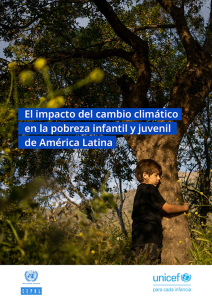
What is it about?
Analyzes how climate change affects poverty child and youth, deepening social inequalities pre-existing.

Contribution id:
Linking climate impacts to key dimensions of child well-being, such as income, education, health and social protection.

Regional relevance:
Reinforces the need for climate policies with a focus on rights and of children for a just transition and inclusive in Latin America.

👉 See more

What is it about?
Analyze the degree of alignment between the national plans for economic development and climate goals of the Paris Agreement.

Contribution id:
Identifies progress, gaps and good practices in mainstreaming of mitigation and adaptation goals in the instruments of economic planning.

Regional relevance:
Provides evidence to strengthen the coherence between economic policy and climate commitments in Latin America and the Caribbean.

👉 See more

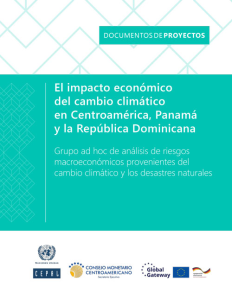
What is it about?
Evaluates the economic impacts of climate change in one of the regions most vulnerable to global warming.

Contribution id:
Quantifies economic losses associated with extreme weather events and gradual changes in climate, highlighting the costs of inaction.

Regional relevance:
Underlines the urgency of investing in adaptation and resilience as central to development strategies in Central america and the Caribbean.

👉 See more

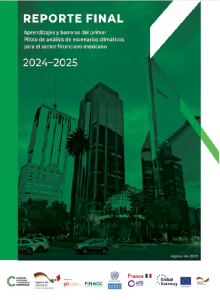
What is it about?
Systematizes the experience of the first pilot analysis of climate scenarios applied to the financial sector in Mexico.

Contribution id:
Identifies learning, technical barriers, and institutional and capabilities needed to integrate climate risk in the financial evaluation.

Regional relevance:
Delivery transferable lessons to move forward in the incorporation of the analysis of climate risks in the financial systems of the region.

👉 See more

📰News featured

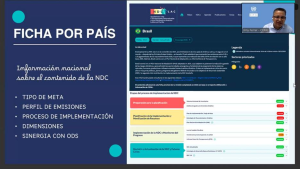
NDC LAC: key information to strengthen climate action in Latin America and the Caribbean

In the framework of the webinar “Results of the COP30: implications for climate action from the private sector”, the commission presented the digital platform regional NDC-LAC, which consolidates key information for monitoring the climate commitments of the countries of Latin America and the Caribbean.

👉 Read news

NDC 3.0 in Latin America and the Caribbean

On NDC LAC, you can access the updated climate commitments (NDC 3.0) of countries in Latin America and the Caribbean.

👉 Go to NDC LAC

Unit Economics of Climate Change – Division for Sustainable Development and Human Settlements

READ MORE
News

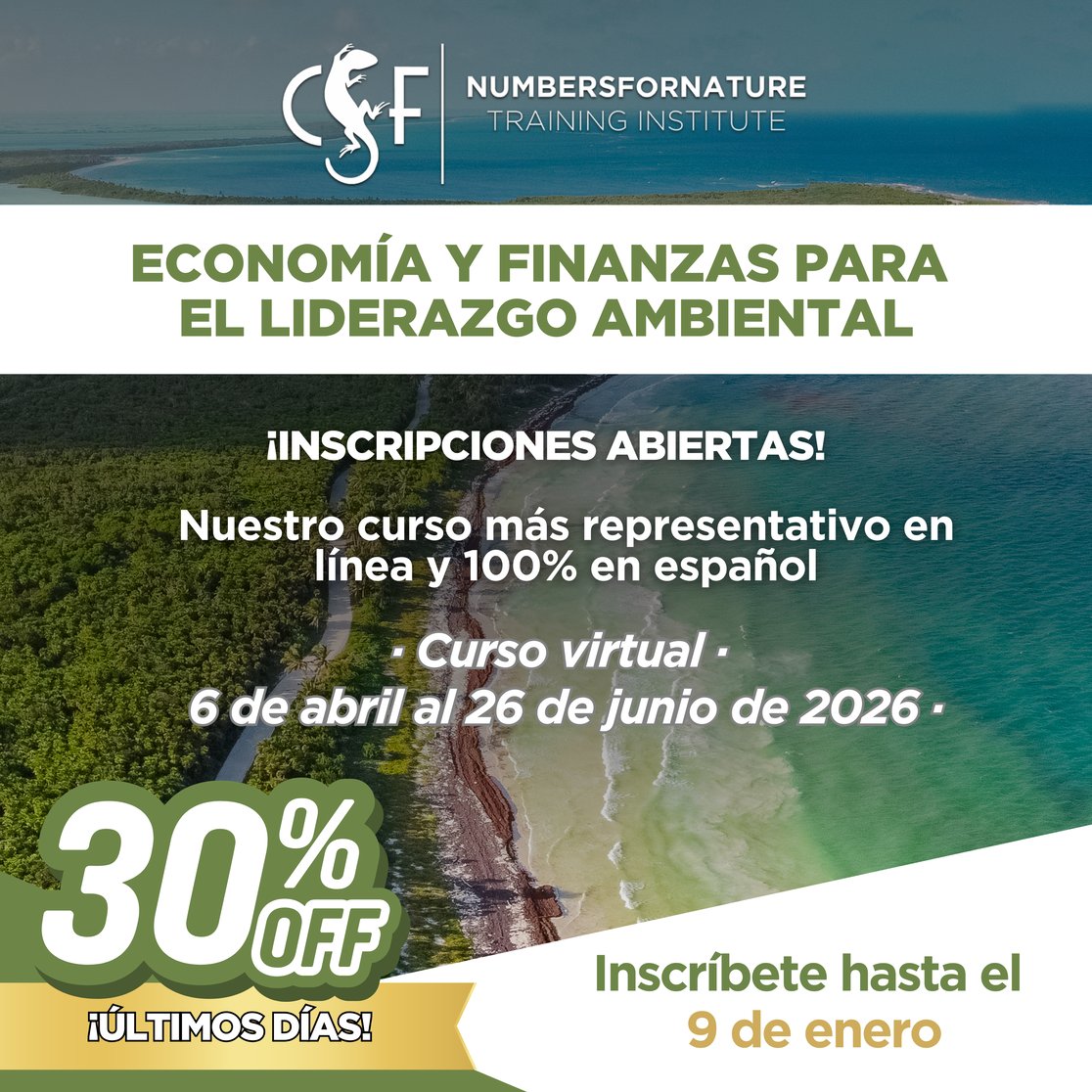
30% Discount: Environmental Leadership Program

30% on tuition. Discount ends January 9.

N4NTI Logo  (2)
Economy and Finances for the Environmental Leadership 2026  
OPEN FOR REGISTRATION – LAST DAYS TO SAVE 30%
Deadline: January 9 Enrollment is now open for our online Environmental Leadership course in English: Economics and Finance to Environmental Leadership 2026    Español 30% - Ultimos días
Registration with the 30% discount!
This virtual course, taught in Spanish, is designed for environmental professionals who want to add to their economic and financial toolkit. With only a few days left to register with 30% discount. Throughout the course, participants will learn how to better understand the economic drivers behind environmental challenges, communicate more effectively with policymakers, and design conservation strategies that are both impactful and financially sound. If you’re looking to elevate your work—or your team’s—with stronger evidence and clearer economic narratives, dont wait to enroll—spaces are limited and the 30% discount expires soon. Participants will learn about: Economic fundamentals of Natural resource economics Behavioral economics Ecosystem services and valuation, Cost–benefit analysis Financial solutions Environmental policyWhen: April 6 – June 26, 2026. Tuition: $ 1000  Enroll  by January 9 to receive a 30% tuition discount using the coupon prontopago2026. Spots are limited. Don’t miss out on joining the 2026 cohort.  
Enroll now and save 30%
READ MORE
Congress

WCERE 2026: Call for Participation & Grants

WCERE2026 Carcavelos – Cascais, Portugal
29 June – 03 July 2026
7th World Congress of Environmental
and Resource Economists
CALL FOR PARTICIPATION GRANTS, CALL FOR EXHIBITORS & CALL FOR SPONSORS
The 7th World Congress of Environmental and Resource Economists (WCERE 2026) will take place on 29 June – 03 July 2026 in Carcavelos Campus located 20 minutes from Lisbon in the municipality of Cascais, Portugal.The Congress will be held in person, while including some hybrid events as part of the programme.   The conference is hosted by the Nova School of Business and Economics (Nova SBE) and co-organised by the World Council of Environmental and Resource Economists Associations (WCEREA) and Nova SBE.
Call for participation grants
Deadline for application: January 16, 2026
Notification of acceptance: March 20, 2026 Apply here
WCEREA Member and Partner Associations and NOVA FORUM have secured participation grants to support individuals from economically disadvantaged countries and young scholars attending the Congress. These grants aim to alleviate financial barriers and facilitate the participation of deserving individuals in the Congress. Only paper presenters are eligible for WCERE 2026 participation grants. The grant amount is used to cover the Congress registration fee prior to the Congress; the residual is remitted through bank transfer to the grantee after the end of the Congress. Read the full call on WCERE’s website and apply by January 16, 2026.
Call for exhibitors
Deadline for applications: March 12, 2026
Exhibition Packages
We would like to invite you to participate in the Exhibition, which is traditionally featured as an important part of the Congress. The Nova SBE Carcavelos Campus offers a modern and attractive venue. The exhibition area will be centrally located to ensure high visibility and accessibility for all participants, in close connection with the main conference activities. Please note that exhibition space will be limited. Applications will therefore be considered on a first come, first served basis, and may be exhausted before the end of the application deadline. The Exhibition area is also ideal to showcase job offers and meet possible candidates among the Congress participants. For more details and to apply, please access the WCERE2026 Exhibition Prospectus.
Call for sponsors Sponsorship Packages
WCERE 2026 offers a valuable opportunity for institutions, organizations, and partners engaged in environmental and resource economics to support and participate in one of the world’s leading congresses in the field. Sponsorship provides visibility within an international community of researchers, policymakers, and professionals dedicated to advancing knowledge and dialogue on environmental, climate and resource economics.Your support will contribute to the success of this major international event and showcase your organization’s commitment to advancing research and dialogue on critical societal issues. Discover the sponsorship options and benefits in the WCERE Sponsorship Prospectus.
Keynote speakers
Lint BarrageLint BarrageETH ZurichSwitzerland
Natalia FabraNatalia Fabra Center for Monetary and Financial Studies (CEMFI)SpainJuan Pablo MonteroJuan-Pablo MonteroPontificia Universidad Católica de ChileChile
Rashid Sumaila Rashid SumailaUniversity of British ColumbiaCanada
Calls for papers and sessions
Call for papers Deadline for submission: January 16, 2026
Notification of acceptance: March 12, 2026 Submit your paper Call for Science-Policy-Business sessions Deadline for submission: January 16, 2026
Notification of acceptance: February 16, 2026 Submit your session Call for Thematic sessions Deadline for submission: January 16, 2026
Notification of acceptance: March 12, 2026 Submit your session
Programme Committee
Maria Antonieta Cunha e Sá (Nova SBE) – Co-Chair Simone Borghesi (EAERE) – Co-ChairKen-Ichi Akao (AAERE) Randall Walsh (AERE)Selma Karuaihe (AFAERE) Marcelo Caffera (LAERE)
Local Programme Committee
Inês Azevedo (Stanford University, USA)António Bento (University of Southern California, USA)Assunção Cristas (Nova School of Law, Portugal)Renato Rosa (University of Coimbra, Portugal) Catarina Roseta-Palma (Iscte – University Institute of Lisbon, Portugal)
Important dates
January 16, 2026 Deadline for paper and session submissionsDeadline for participations grant applications  February 16, 2026Notification of acceptance of Science-Policy-Business sessions March 12, 2026Notification of acceptance of papers Notification of acceptance of thematic sessionsRegistration opens for presenting authors  March 20, 2026Notification of participation grantsMarch 30, 2026 Registration opens for non-presenting authors April 15, 2026 Deadline by which presenting authors must be registered for inclusion in the programmeEarly registration deadline  June 3, 2026Preliminary Congress programme release  June 29 – July 3, 2026WCERE 2026
Further information
For further information about the calls for contributions, please contact programme@wcere2026.org. For any additional information, please contact info@wcere2026.org.
WCERE 2026 website
WCEREA Member Associations AAERE, Asian Association of Environmental and Resource EconomicsAERE, Association of Environmental and Resource EconomistsAFAERE, African Association of Environmental and Resource Economists EAERE, European Association of Environmental and Resource Economists WCEREA Partner Association LAERE, Latin American Association of Environmental and Resource Economists WCEREA Board Members Ken-Ichi Akao (AAERE) Sheila Marie Cavanagh Olmstead, Randall Walsh (AERE) Nnemeka Chukwuone, Precious Zikhali (AFAERE) Phoebe Koundouri (Chairperson), Simone Borghesi (EAERE) Claudia Aravena, Marcelo Caffera (LAERE)
READ MORE
Webinar

Invitation to the EfD Webinar Series with Gemeda Olani Akuma (PhD)

Dear EfD member,

We are delighted to invite you to the EfD Webinar Series featuring Gemeda Olani Akuma (PhD).

Dr. Gemeda Olani Akuma is a Natural Capital Collaborative (NatCap) Postdoctoral Fellow at EfD Uganda Center, Makerere University. His postdoctoral research aims to advance research–policy linkages in water systems, biodiversity, and ecosystem services across Uganda and sub-Saharan Africa, building on broader interests in climate-smart agriculture, climate resilience, and rural livelihoods.

Webinar Details:  

Title: Village Networks and Climate-Smart Agriculture: Pathways to Adoption and Resilience in Rural Ethiopia

Date: November 25, 2025

Time: 2 PM CET

VenueZoom

Add to Calendar:

Note: EfD webinars are FREE to all. Please consider sharing this message with your wider network.

Recordings are available on the EfD YouTube Channel.

We look forward to seeing you at the webinar.

Warm regards,

EfD Global Hub

READ MORE
Events

📢 Invitation to the Eleventh Annual Meeting NENRE EfD-Chile 2025

We are pleased to announce the completion of the Eleventh Annual Meeting of NENRE EfD-Chile, which will be performed on days 6 and 7 November 2025 in format hybrid (face-to-face and virtual) from Hotel Termas de Catillo, Parral.

This meeting seeks to bring together academics/ace, researchers, public authorities, students, representatives of NGOS and stakeholders in the world of social and environmental to discuss the main challenges and advances in the economics of natural resources and the environment.

🌱 Who arranged?

The event is organized by the Research Program on the Economics of Natural Resources and Environment (NENRE EfD-Chile), belonging to the Vice-principal of Research and Development, University of Concepción, in collaboration with the international network Environment for Development (EfD).

🎓 Theme of the meeting

During the conference will be developed parallel sessions of research in areas such as:

  • Fishing and aquaculture
  • Transitions to sustainable energy
  • Mining and water resources
  • Waste management
  • Environmental public policies in Chile and Latin america

In addition, it will feature a panel discussion on public policy entitled:

“Challenges and advances in the regulation of textile waste”, with the participation of:

  • Dr. Marcela Jaime, Director of NENRE EfD-Chile, University of Concepción
  • Mr. Mario Rivas, SEREMI of the Ministry of the Environment, Region of Ñuble
  • Dr. Alejandro Lopez-Feldman, Director of Research, Network EfD
  • Mr. Bastian Barria, co-Founder of Desert Dress

Participation and registration

If you want to attend the event, either in person or online, you can register through Even3 at the following link:
https://www.even3.cl/e/nenre2025-608372?lang=es

READ MORE
News

Call for Participation: Global Economics Survey

Dear LAERE Community, 

We invite you to have your voice heard and participate in a survey that will examine the degree of global professional consensus on various topics in the field of environmental and natural resource economics. This survey is, or already has been given to members of EAERE, AAERE, AFAERE, and AERE. By participating in this survey, you will help make sure that the results generated are robust, and representative globally.

Time commitment: 10 – 15 minutes.

Anonymity and Data Usage: All data is anonymous and confidential. Data will be used for research purposes only. Results will be shared with LAERE community.

Survey Link: https://go.unl.edu/globalconsensussurvey

Please complete the survey by November 30th, 2025. The survey is mobile-friendly but is best taken on a computer.

If you have questions, please contact us. Feel free to forward this invitation to your colleagues.

Thank you for your input!! Your participation will make an important contribution towards measuring, and understanding, levels of professional consensus in the discipline.

If you have any questions, you can contact:

Prof. Lea-Rachel Kosnik (University of Missouri-St. Louis):  kosnikl@umsl.edu 

Prof. Simanti Banerjee (University of Nebraska-Lincoln): simanti.banerjee@unl.edu

READ MORE
Academic Opportunities

Summer School: Social Theories & Resources

I’m delighted to announce the call for the fourth edition of the ReSToRE (Researching Social Theories, Resources and Environment) International Summer School is now open. The theme is this year “Delivering Sustainability to the Global Community”. 

The ReSToRE Summer School will be held from 29 June – 3 July 2026 at UCD in Dublin, Ireland. This is an exciting opportunity for a select group of early career researchers and practitioners from the natural, physical, and social sciences and humanities to tackle complex issues associated with earth resources. 

The deadline for applying is the 1st of December.

More information is available on the ReSToRE website. I would also be grateful if you would please share this information with anyone who might be interested in joining. They can sign up to our mailing list via the website or join the ReSToRE LinkedIn Group!

Kind regards,

Geertje

READ MORE