Information about the event
Date
Wednesday, August 13, 2025 — Saturday, August 16, 2025
Place
University of Gothenburg
Contact
Christopher Vasquez-Quezada
E-mail
SETI@udec.cl
Link
Please provide us your article!
Type of event
Academic workshop
Annual meeting of SETI 2025
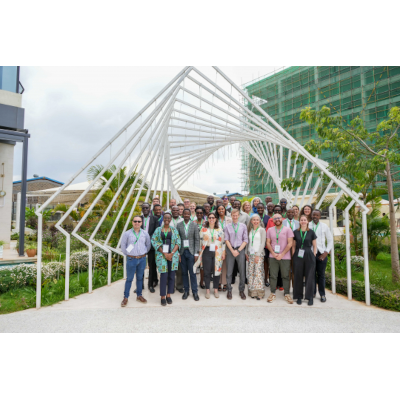
Dates and place: University of Gothenburg. 13-16 August of 2025.
The annual meeting of SETI this year will feature regional workshops and will be expanded to a four-day event to allow for in-depth discussions on and the collaboration in meetings of the strategic planning in order to coordinate the different regions of the world. The place and the final dates will be confirmed as soon as possible.
The goal of the meeting is twofold. first, to advance the strategic plan of SETI for the next quadrennium (2025-2028). Along 2025, the activities of SETI will focus on the key issues identified through semi-structured interviews and sessions of working groups of the network EfD and other researchers at SETI. The annual meeting will provide a specific opportunity for a large part of this work. A fundamental goal, in line with the mandates of funding from the Swedish International Development Cooperation (Sida) for EfD and, therefore, for SETI, is to achieve alignment with the political priorities of the centers EfD africans, in particular in sub-saharan Africa (SSA). However, it was also taken into account the coordination and opportunities at the global level, as well as the potential to leverage other funding opportunities complementary.
In the second place, we will continue to share the results of the research and interacting on the needs in the matter of formulation of policies for energy transition.
Call for papers
We invite researchers to submit manuscripts of original research or extended abstracts (≤1000 words) on a wide range of issues related to the transitions to sustainable energy, with special emphasis on emerging priorities of the collaboration SETI. Although, as usual, you accept all of the issues related to the transitions to sustainable energy, it is strongly recommended to submit papers related to the following areas:
- Energetic transitions in the kitchen and heating: address energy poverty, indoor air pollution and deforestation solution that is more clean.
- Electrical networks of autonomous and connected to the network: to overcome the barriers in the markets self-employed, to improve the reliability of the network and to ensure equitable access to electricity.
- Impacts of renewable energy: explore the results of social, economic and environmental performance of renewable energy technologies, especially in sub-saharan Africa.
- Nexus between technology, energy and air pollution: to investigate the interactions between energy systems and the quality of the air, focusing on the strategies of reducing the pollution.
- Nexus between energy and gender: promoting transitions in the energy level playing field in terms of gender, ensuring that recognize and address the roles and needs of women.
- Energy transition that is inclusive and fair: what does this mean and how you can support it with human and financial capital?
- The role of energy access interventions and energy in the development of social resilience in the face of increasing macroeconomic uncertainty, policy and the natural systems (for example, arising from climate change).
In addition, we encourage you to submit contributions on the following priorities and recent of the program’s Green Economy Inclusive (IGE): to Overcome the dependence of the biomass and achieving energy efficiency. We also welcome with interest the work that will try to summarize the lessons learned in different contexts, or that focus on the contextual characteristics that give rise to systematic variations in the dynamics and the results of the energetic transitions.
Call for session proposals for regional workshops
Given the regional focus expanded to the Annual Meeting SETI 2025, also invite you to submit session proposals creative to explore key issues of the energy transition in different regions. Can be addressed deliberately a matter of energy transition in a single region or sub-region, or may encourage interregional interactions (but with the regional relevance specified and articulated in the proposal).
We encourage creativity, but these sessions can include:
- Opening speeches, round tables, workshops and plenary discussions moderated on the challenges of the energy transition specific to each region.
- Sessions on policies multinational companies (in particular those covering the sub-saharan Africa) that allow the participation of professionals and policy makers.
- Round tables of policy-makers to reflect on their key knowledge gaps in relation to the policy objectives of the energy transition.
- Collaborative sessions that bring together researchers, policy makers, and funders to discuss research agendas stunning and funding opportunities.
- Research schemes or ideas presented to policy makers.
The aim of the workshops is to contribute to the development of concept notes in support of the following objectives:
- Develop and initiate research agendas relevant to the policies through processes of co-creation adapted to the objectives of the sub-groups, collaborative, ensuring the alignment with the priorities of the funders.
- Identify and pursue funding opportunities, assigning responsibilities to key members of SETI to develop applications for competitive grants.
- Establish a plan of participation for policy makers and disseminate the results of the research effectively through policy reports, blogs, and outreach materials created together.
- Create a mechanism of communication (for example, virtual meetings, online forums) to keep the collaboration between the members of SETI 2025 to 2027.
- Publish blog posts and contents on social networks after each meeting of the working group to highlight the debates, and most important ideas.
Submission process
Send your article/summary enlarged and/or session proposals before the march 23, 2025.
The submission form is located here: https://duke.qualtrics.com/jfe/form/SV_1ZzUle16jEX7BzM.
If you cannot access the form, please submit your proposal to SETI@udec.cl.
We recommend you to send the proposals as soon as possible, especially the proposals for sessions on policies, because they require more planning time.
Important information:
- You can send multiple entries, but each should be on a separate form. Please send a separate extended abstracts/manuscripts and ideas for sessions.
- We will notify authors of papers and sessions accepted during the month of April.
- Participation in the workshop will be free and open to all, although it will be need to register first.
- It is possible to grant total or partial financing for the travel expenses to participants from countries of low and middle-income, as well as the students in those same regions. Will be reported in future communications to the authors of the accepted papers.
If you have any question, please contact with Christopher Vasquez-Quezada (coordinator of the project SETI) in SETI@udec.cl.
We look forward to your contributions and an interesting debate on the transition to sustainable energy in SETI 2025.
Sincerely
The Initiative for the Transition to Sustainable Energy