
Job Opportunities

Researcher Postdoctoral

At the University of Talca we seek a Researcher(a) Postdoctoral fellow, in the framework of the project ‘Interdisciplinary Center for Aquaculture Research-Applied Research’.

The postdoctoral position is directed to an investigator with a background in Economics, Natural Resource Economics and Environmental Economics or Applied Economics (with a particular focus on the economics of water resources, including economics of aquaculture and fisheries) with experience in empirical research, both quantitative and qualitative in the area of economics of natural resources and the environment.

What functions do you perform?

Perform research in the framework of the project ‘ Interdisciplinary Center for Aquaculture Research-Applied Research , online Research ‘socio-Economic Impacts, Governance, and Market Dynamics’, by carrying out the following functions:

  1. Develop solutions to address the effects of climate change on the sector, strengthening their resilience, adaptation, and competitiveness
  2. Identify and measure the socio-economic impacts of aquaculture in Chile and the opportunities and challenges for sustainable and inclusive development
  3. To assess the impacts of current and future regulations on the sector aimed at effective governance and decision-making mechanisms in the aquaculture sector
  4. Promote sanitary practices cost-effective efforts to improve animal welfare and food safety in the aquaculture industry to strengthen its position in global markets.

The people applicants must submit the following background:

  • Maintain updated curriculum vitae on the platform Working
  • The CV should include the academic record, a summary of the doctoral thesis and the historical record full of their scientific productivity.

Documents to attach

In the section Add Attachments on the platform, the applicant must attach the following information:

  • Academic certificates: simple copy of the certificate Doctor’s degree, as well as professional degrees academic and/or corresponding.
  • Letters of recommendation: two (2) letters of recommendation. The format is available on the website of the Directorate of Research of the University of Talca, in the section ‘Documents’ .

*The rules of this contest will be available on the website of the Directorate of Research of the University of Talca.

*This offer of employment is governed under the Law N°21.015 that encourages the inclusion of people with disabilities in the world of work.

**By virtue of the entry into force of law N°21.389 (which created the National Register of Debtors of maintenance payments) and in the case of being hired and/or named/or in any of the charges published in this portal, the institution contracting should be consulted if you have an obligation pending in the above-mentioned National Register of Debtors of maintenance payments, to proceed with the deductions and payments to which they relate. The person named in the register shall authorize, as an enabling condition for the recruitment/appointment, the institution respective proceed to do the withholdings and payments directly to the food.

Desired profile

  1. Be chilean or foreign(to) with residence in Chile and residence in the country at the time of launch work.
  2. Possess the academic degree of Doctor(a) at the time of the application in national programmes accredited or equivalent foreign nationals, in disciplines atingentes to the profile required: Phd in Economics, Applied Economics, Natural Resource Economics, Agricultural Economics and Natural Resources or in related disciplines, which have expertise in the Economics of Aquaculture and Fisheries.
  3. Possessing a history of competitive research, primarily in regard to the scientific articles and linking it to the theme of the specific research to be developed in the project for this contest.
  4. Availability to start functions within the first half of 2026, according to institutional definition.
  5. Domain of the English language.

For more information go here.

READ MORE
Webinar

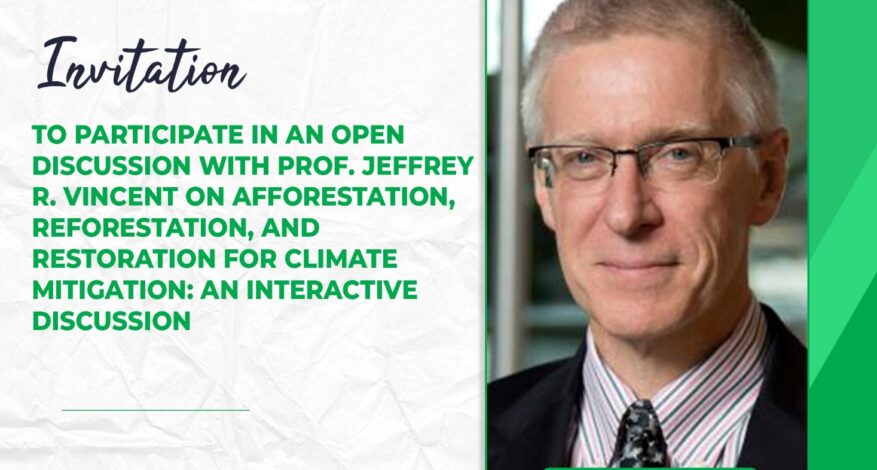
EfD Webinar Special Edition: Join our interactive discussion on forest restoration

Dear EfD Member,

We are pleased to invite you to a special edition of the EfD webinar series.

This month, we are trying a different format. Rather than a traditional seminar presentation, this session will be highly interactive and discussion-oriented. We invite participants to come prepared to briefly share their research interests, ongoing work, or thoughts, or policy-engagement experiences related to afforestation, reforestation, forest restoration, and other connected areas such as energy, water, agriculture, ecosystem services, climate policy, and economic development.

Participants are also encouraged to discuss practical, methodological, institutional, or policy-related challenges they encounter in their work. The objective is to foster an open exchange of ideas and identify new perspectives, collaborations, and possible approaches to addressing shared challenges.

About the Discussion Leader

The discussion will be led by Prof. Jeffrey R. Vincent, Clarence F. Korstian Professor of Forest Economics and Management at Duke University’s Nicholas School of the Environment.

Prof. Vincent is an internationally recognized environmental and resource economist whose work has significantly shaped research and policy discussions on forests, natural resource management, and sustainable development, particularly in low- and middle-income countries. Over his distinguished career, he has held academic appointments at leading institutions including Duke University, Harvard University, and the University of California San Diego, and has advised governments and international organizations on issues related to conservation, forest policy, and climate mitigation.

His broad interdisciplinary experience across environmental economics, policy analysis, and sustainability makes this a valuable opportunity for open dialogue across the EfD community.

Webinar Details

    • Title: Afforestation, Reforestation, and Restoration for Climate Mitigation: An Interactive Discussion
    • Discussion Leader: Prof. Jeffrey R. Vincent
    • Date: Tuesday, May 19
    • Time: 14:00 CET
    • Platform: Zoom

How to Participate

Attendance is free and open to all. To encourage a rich and lively discussion, please feel free to share this invitation with colleagues, students, and collaborators who may benefit from or contribute to the conversation.

We look forward to an engaging and productive exchange of ideas.

Warm regards,

EfD Global Hub 

READ MORE
Academic Opportunities

2nd International Alpine Workshop on Energy Economics and Policy (AWEEP 2026) – EAERE Supported | September 3–5, 2026

The Centre for Energy Policy and Economics (CEPE), ETH Zurich, and the Institute of Economics (IdEP), Università della Svizzera italiana (USI), are pleased to announce the 2nd International Alpine Workshop on Energy Economics and Policy (AWEEP 2026), to be held on September 3–5, 2026 at the House of Sustainability in Airolo, Switzerland. The workshop is organized with the support of EAERE.

The Workshop

AWEEP 2026 is designed as an intimate, high-quality forum for presenting and discussing cutting-edge research in energy economics and policy. The workshop brings together leading scholars in a unique format that combines traditional academic sessions with innovative, experience-based interactions.

Two distinctive features characterize the workshop:

  • Learning in Nature
    Participants will engage in dynamic “hiking presentations” during alpine hikes, offering a creative and interactive environment to exchange research insights while immersed in nature.
  • Alpine Hut Lifestyle Experience
    The workshop includes a shared living experience at the House of Sustainability, encouraging informal discussions, collaboration, and academic exchange beyond conventional conference settings.

Invited Speakers

Linda Nøstbakken (Norwegian School of Economics)

Shuang Zhang (Imperial College)

Call for papers

Submissions are invited in all areas of energy economics and policy, with a particular interest in contributions using applied econometric methods. Topics include, but are not limited to:

  • Energy and environmental policy evaluation
  • Behavioral and experimental approaches to energy use

Papers (PDF format) should be submitted via email

Fees and Logistics

The registration fee is CHF 150, covering meals, accommodation in shared dorm-style rooms, and local transport during the workshop. Participants are responsible for their travel to Airolo and any alternative accommodation arrangements if preferred. Participation is limited to approximately 20–25 attendees, ensuring a focused and collaborative environment, with a balanced mix of PhD students, postdoctoral researchers, and faculty members.  More information here

Important dates

May 15, 2026 – Submission deadline
June 15, 2026 – Notification of acceptance
September 3–5, 2026 – Workshop dates

Scientific committee

Massimo Filippini (ETH Zurich and USI)

Ken Gillingham (Yale University)

Lint Barrage (ETH Zurich)

Meredith Fowlie (UC Berkeley)

Sebastien Houde (University of Lausanne)

Cloé Garnache (ETH Zurich and Oslo Metropolitan University)

Organisers

Massimo Filippini (ETH Zurich and USI)

Ken Gillingham (Yale University)

Meredith Fowlie (UC Berkeley)

Additional information

For submissions and inquiries, please contact

More information about the venue here

https://eepe.ethz.ch/news_and_events/events/aweep.html

READ MORE
Webinar

EfD Webinar Series Invitation

Dear EfD Member,

Livestock is a cornerstone of global nutrition and social welfare, but it sits at the heart of our climate challenge. Better animal health management is a promising solution.

We are thrilled to invite you to the return of the EfD Webinar Series on April 28.

Join Dr. Kevin W. Maina as he presents groundbreaking research on the intersection of agricultural innovation and gender equity. Using Kenyan dairy systems as a case study, Dr. Maina explores why scaling better practices must be gender-sensitive to be truly sustainable.

Webinar Details

    • Topic: Healthier Herds, Heavier Workloads? The Gendered Time and Resource Implications of Herd Health Management in Kenyan Dairy Systems
    • Speaker: Kevin W. Maina (PhD, University of Bonn)
    • Date: Tuesday, April 28, 2026
    • Time: 14:00 CET
    • Platform: Zoom

Why You Should Attend

Dr. Maina is a leading Agricultural and Development Economist specializing in impact evaluation and behavioral economics. In this session, you will gain insights into:

    • The trade-offs between improved animal health and household labor.
    • How institutional innovations can better support women in the dairy sector.
    • Data-driven strategies for scaling climate-smart agricultural practices.

Cost: Free to all members and the public.

Spread the word: Know someone interested in gender studies or sustainable agriculture? Please feel free to forward this invitation!

We look forward to seeing you there and engaging in a vibrant Q&A session.

Warm regards,

EfD Global Hub

READ MORE
Job Opportunities

Call for Applications: Associate/Assistant Professor in Environmental and Ecological Economics

Job description

Tipo de planta académica: Regular Academic Track

Employment: Full time

The Faculty of Agronomy and Natural Systems (FASN) of UC Chile, one of the leading academic institutions in Latin America, is seeking exceptional and highly motivated candidates for a full-time Associate/Assistant Professor, for the development of undergraduate and graduate teaching, research and extension in the area of Environmental and Ecological Economics. The selected candidate will be part of a diverse and interdisciplinary team within the new academic program in Natural Resources Engineering.

The ideal candidate should possess a systems approach and strong quantitative skills to research economic issues related to the environment and ecology. The selected individual must have the ability to participate in existing research programs and develop independent and innovative research in the fields of environmental economics and natural resources. Their background should include one of the following areas: conservation economics, climate change economics, public policy, efficient resource allocation, economic evaluation of nature-based solutions, environmental impact economics, socio-ecological transition economics.

It is expected that the selected candidate will be able to teach at least two undergraduate courses for natural resources engineering students and at least one graduate course related to their specific skills. One of the undergraduate courses must be related to Introduction to Environmental and Natural Resources Economics (AGE 206), and the second should be an advanced undergraduate course in the field of environmental and natural resources economics (Natural Resources Economics (AG 320)); all courses must be taught in Spanish.

The candidate is also expected to lead a research program within this area, being responsible for securing funding, planning research activities, generating scientific publications, and training graduate students. Additionally, the candidate is expected to develop links with the community and support technology transfer of products developed during research according to the standards established by UC Chile.


Equal opportunity employer

UC Chile is committed to equal opportunities, to building an inclusive, diverse, fraternal community, and to promoting the academic development of women and men.


Qualifications

  • Hold a Ph.D. degree at the time of hiring in one of the following disciplines: Economics, Natural Resources Economics, Environmental Economics, Ecological Economics, or equivalent.
  • Skills to lead a high-quality research program in their area of expertise.
  • Commitment to teaching and mentoring undergraduate and graduate students.
  • Excellent communication skills.
  • Evidence of research productivity.
  • Particularly valued attributes for the selected individual include:
  • Ability to link basic and applied research.
  • Experience in interdisciplinary research.
  • Record of obtaining research funding.
  • Relevant experience in teaching at the undergraduate or graduate level.
  • Experience in natural resource management.

Required documents

Applicants must send the following documents to Professor Oscar Melo (omelo@uc.cl) prior to the application deadline. In the email subject indicate: Academic Call in Assistant/Associate Professor of Environmental Economics.

  1. A cover letter addressing your qualifications and aspirations, explicitly identifying how they relate to the specific duties and responsibilities described in the job description;
  2. A three-page curriculum vitae (CV);
  3. A two-page letter specifically addressing the candidate’s commitment to fostering student success and teaching strategies for undergraduate and graduate courses.
  4. A two-page letter describing your research proposal;
  5. A list of publications in peer-reviewed journals.
  6. Two letters of recommendation with names and contact information (email, phone, and address) of academics who can accurately describe the candidate’s strengths and characteristics. Please note that they may be contacted by the selection committee during the process.
  7. Digitized copies of degrees and diplomas.
  8. A person of foreign nationality without permanent residence in the country or who applies from abroad, if selected for the position, will then need to process their visa in their country of origin to join the academic staff of UC Chile.

Application Deadline: April 3, 2026

Availability: Second semester 2026 (ideal) or first semester 2027.


Additional information

Inquiries can be directed to Professor Oscar Melo (omelo@uc.cl) prior to the application deadline.

READ MORE
News

Participate in Survey

Lea-Rachel Kosnik and Simanti Banerjee are conducting a survey on Global Consensus in the field of Environmental & Natural Resource Economics. Please help them by taking part in the survey and asking a colleague to do so too! If you have already started the survey, please consider finishing it. EVERY RESPONSE COUNTS! This research will be important in understanding what our profession collectively thinks about different topics and is the very first to measure consensus at a global level. Currently response rates are low so we would be really grateful for your help. 

All data is anonymous and confidential.

Survey link: https://go.unl.edu/globalconsensussurvey

If you have questions, please contact 

Lea-Rachel Kosnik (University of Missouri-St. Louis):  kosnikl@umsl.edu  

Simanti Banerjee (University of Nebraska-Lincoln): simanti.banerjee@unl.edu  

Thank you for your participation!

READ MORE
News

Call for Participation: Global Professional Survey

Dear LAERE Community, 

We invite you to have your voice heard and participate in a survey that will examine the degree of global professional consensus on various topics in the field of environmental and natural resource economics. This survey is, or already has been given to members of EAERE, AAERE, AFAERE, and AERE. By participating in this survey, you will help make sure that the results generated are robust, and representative globally.

Time commitment: 10 – 15 minutes.

Anonymity and Data Usage: All data is anonymous and confidential. Data will be used for research purposes only. Results will be shared with LAERE community.

Survey Link: https://go.unl.edu/globalconsensussurvey

Please complete the survey by March 31st, 2026. The survey is mobile-friendly but is best taken on a computer.

If you have questions, please contact us. Feel free to forward this invitation to your colleagues.

Thank you for your input!! Your participation will make an important contribution towards measuring, and understanding, levels of professional consensus in the discipline.

Lea-Rachel Kosnik (University of Missouri-St. Louis):  kosnikl@umsl.edu 

Simanti Banerjee (University of Nebraska-Lincoln): simanti.banerjee@unl.edu

Reminder 1 (October)

Header: Call For Participation – Short Survey on Degree of Global Professional Consensus in Environmental and Natural Resources Economics!

Dear LAERE Community, 

We invite you to participate in a survey to examine the degree of global professional consensus on different topics in the field of environmental and natural resource economics.

Time commitment: 10 – 15 minutes.

Anonymity and Data Usage: All data is anonymous and confidential. Data will be used for research purposes only. Results will be shared with LAERE community.

Survey Link: https://go.unl.edu/globalconsensussurvey

Please complete the survey by November 30th, 2025. The survey is mobile-friendly but is best taken on a computer.

If you have questions, please contact us. Feel free to forward this invitation to your colleagues.

Thank you for your input!! Your participation will make an important contribution towards measuring, and understanding, levels of professional consensus in the discipline.

Lea-Rachel Kosnik (University of Missouri-St. Louis):  kosnikl@umsl.edu 

Simanti Banerjee (University of Nebraska-Lincoln): simanti.banerjee@unl.edu

Reminder 2 (November)

Header: Call For Participation – Short Survey on Degree of Global Professional Consensus in Environmental and Natural Resources Economics!

Dear LAERE Community, 

We invite you to participate in a survey to examine the degree of global professional consensus on different topics in the environmental and natural resource economics.

Time commitment: 10 – 15 minutes.

Anonymity and Data Usage: All data is anonymous and confidential. Data will be used for research purposes only. Results will be shared with LAERE community.

Survey Link: https://go.unl.edu/globalconsensussurvey

Please complete the survey by November 30th, 2025. The survey is mobile-friendly but is best taken on a computer.

If you have questions, please contact us. Feel free to forward this invitation to your colleagues.

Thank you for your input!! Your participation will make an important contribution towards measuring, and understanding, levels of professional consensus in the discipline.

Lea-Rachel Kosnik (University of Missouri-St. Louis):  kosnikl@umsl.edu  Simanti Banerjee (University of Nebraska-Lincoln): simanti.banerjee@unl.edu

READ MORE
Job Opportunities

Job Opening: Coastal Development Postdoc

DURATION: Full time. 18 months, w/possibilities for extension until 36 months (i.e. through competitive Postdoc ANID grants).

DESCRIPTION: A postdoctoral position as part of the Coastal Social-Ecological Millennium Institute (SECOS) is available. SECOS Institute is formed by a multidisciplinary team of scientists from several Chilean universities, focused on coastal sustainability. Main objectives of SECOS are to understand global, regional, and local drivers of change; the social-ecological conditions that hinder sustainability; and to test and implement actions that unravel such conditions. Our work plan has been organized through the study of small- and medium-scale social-ecological experimental units, or ‘learning platforms’, which tackle key issues in Artisanal fisheries, Shellfish aquaculture, and Coastal development as social-ecological systems (SES). In particular, we look for a postdoctoral fellow to join the Coastal Development SES.

Post-doctoral research could be directed towards one of the following areas:

  • Natural capital and biodiversity assessment for coastal development, including valuation and mapping of biodiversity-related ecosystem services, nature-related risks and opportunities, and the analysis of firms’ impacts and dependencies on nature to inform decision-making (e.g., conservation-investment trade-offs, coastal planning, and nature-based solutions).
  • Economic trade-offs between coastal tourism development, conservation, and alternative coastal uses, analyzed within a social–ecological systems framework.
  • Economic impacts of climate change on coastal tourism and cost–benefit evaluation of adaptation options, including nature-based solutions.
  • Tourist preferences, behavior, and willingness to pay for coastal and marine conservation, using stated- and revealed preference approaches.

Methodological note: Currently, we are working on choice modeling using Virtual Reality and eye-tracking technologies to analyze tourists’ preferences and decision-making, and on the analysis of companies’ impacts and dependencies on nature to support nature-related management and coastal development strategies.

Research is expected to combine quantitative economic methods (e.g. non-market valuation, applied econometrics, behavioral economics) with field-based work in small- and medium-scale coastal social–ecological systems.

The successful applicant will be based in one of the SECOS associated institutions in Chile, preferably in the city of Concepción (Universidad de Concepción and Universidad del Desarrollo).  Some fieldwork will be required.

BACKGROUND: PhD in Economics, Environmental Economics, Ecological Economics, or closely related disciplines, with training or experience in non-market valuation, applied microeconomics, socio-economic analysis of environmental issues, or policy evaluation. Experience with quantitative, experimental, or mixed methods applied to sustainability, tourism, or coastal systems will be positively valued. The postdoctoral researcher will work closely with an interdisciplinary team and engage with local coastal communities through intensive fieldwork in coastal social–ecological systems.

TO APPLY: Applicants should submit, electronically or in hardcopy form:

  • Curriculum Vitae in extenso: LAST NAME, name – CV.
  • Copies of degree certificates: LAST NAME, name – certificate.
  • Cover letter: LAST NAME, name – letter.
  • A statement of previous research achievements: LAST NAME, name – statement.
  • Copies of relevant articles (maximum 3): LAST NAME, name – articles.
  • A research plan (maximum 3 pages): LAST NAME, name – plan.
  • A list of 2 referees (with contact details): LAST NAME, name – referees

Applications should be sent to: postulaciones@socioecologiacostera.cl, E-mail subject: SECOS Postdoc CD Application– CANDIDATE LAST NAME.

Deadline: March 17th, 2026.

DATES: Preferred start date is at the middle or later in April, 2024.

SALARY: The Postdoctoral fellow will receive a monthly salary of around CLP$2.100.000.- (annual salary of about US$ 28,100)

Applications should be submitted to:

Pablo Fuentes
Executive Director
Coastal Social-Ecological Millennium Institute (SECOS)
Universidad Católica de Chile
Santiago

READ MORE
Job Opportunities

Research Proposals: Housing in Latin America

Context

Housing is recognized as a fundamental human right and has direct impacts on multiple
dimensions of well-being, including health, subjective well-being, labor mobility, and
poverty reduction. Although the countries of Latin America and the Caribbean have made
substantive progress in the last decades in terms of structural quality and access to basic
services, significant challenges remain: high rental costs for lower-income households,
constraints on the supply of formal housing, informal settlements, and limited access to
financing. The housing deficit reflects both structural supply-side problems—such as rising
land prices, insufficient service coverage, and limited territorial planning—and demand-
side constraints stemming from inequality and low incomes.

CAF has positioned housing as a strategic priority through the development of its 2023–
2026 Housing Strategy, which seeks to improve access to adequate housing, especially for
vulnerable populations, while ensuring attributes such as durability, urban integration,
security of tenure, and affordability. A central pillar of this strategy is the generation of data
and knowledge, given the region’s historical deficit of information and studies on housing
markets and the evaluation of housing policies.

This call aims to support research that generates rigorous and policy-relevant evidence,
with special interest in studies of policies improving access to housing by low-income
families.

Objective

Through this call, CAF seeks to fund research that provides original and rigorous empirical
evidence on housing markets and housing policies in Latin America and the Caribbean.

In total, up to five research projects will be funded according to the following criteria:

  • Up to 3 projects on topics of housing markets and housing policy in Latin America and the caribbean (see non-exhaustive list below). The selection of these 3 projects will prioritize academic contribution. They may or may not include the study or evaluation of specific policies. They will receive US$ 20.000 and be invited to present their progress at the 2026 workshop of LACEA’s Urban Economic Association LAURBAN to be held in Montevideo in December 2026. Travel and accommodation costs will be covered for one author per selected paper. These projects must produce a paper to be published after 16 months in CAF Working Papers series.
  • Up to 2 projects evaluating specific housing programs in Latin America and the Caribbean. The selection of these two projects will prioritize policy relevance and a plausible causal study of the impacts of a housing policy or housing infrastructure intervention (i.e. water, sanitation, trash collection, etc) in a country of Latin America and the Caribbean. These projects will receive US$ 15.000 and must produce a paper to be published in CAF Policy Papers series after 16 months.

Priority Topics

Proposals may focus on the following non-exhaustive list of topics:

Rental Markets

  • Regulatory frameworks, formalization costs, institutional barriers.
  • Evaluation of public policies subsidizing rental payments or providing rental
    guarantees.
  • Market power, competition, and price dynamics in rental markets.
  • Informality in rental markets and its interaction with tenant protection policies.
  • Short-term rentals, digital platforms, and their effects on long-term rental supply
    and prices.
  • Rental markets, tenure security, and housing stability over the life cycle

Housing supply

  • Effects of land-use regulation, zoning, and urban planning on housing supply and
  • affordability.
  • Market power and competition in the real estate development and housing
    construction sectors.
  • Constraints related to land availability, infrastructure provision, and access to urban
    services.
  • The role of public land, social housing programs, and public–private partnerships in
    expanding supply.
  • Construction costs, productivity in the construction sector, and barriers to
    innovation.
  • Climate risk and insurance markets in formal and informal settings

Housing demand

  • Effects of income shocks, labor market conditions, and macroeconomic volatility
  • on housing demand.
  • Internal and international migration: effects on housing demand and barriers to
    housing access for migrants.
  • Functioning of mortgage markets and mortgage-related policies.
  • Alternative housing finance mechanisms beyond traditional mortgages (e.g.
    guarantees, microfinance, rental finance) and their effects on access, affordability,
    and household welfare.
  • Demographic transition and housing demand: household formation, household
    size, housing size, and specialized housing for the elderly.
  • Effects of remote work and digitalization on housing demand within and between
    cities.

Housing informality

  • Causes and consequences of informal settlements and informal housing
  • arrangements.
  • Evaluation of policies dealing with housing informality, such as slum upgrading,
    relocation, regularization, and titling.
  • Interactions between informality, access to services, and labor market outcomes.
  • Climate and environmental risks in informal settlements.

Economic effects of housing

  • Effects of access to adequate housing on well-being (health, education, subjective
  • well-being).
  • Impacts of housing conditions and location on labor market outcomes, productivity,
    and spatial mismatch.
  • Housing affordability, inequality, and intergenerational mobility.
  • Macroeconomic and fiscal implications of housing policies.
  • Housing, segregation, and urban inequality.
  • Aspects of taxation related to housing: value capture, property tax.

Application

The amount will be disbursed through a single consultancy contract in the name of a team
member or an institution. A detailed budget is not required at this stage.

How to apply

Applications must be submitted through this online form by March 8, 2026 at 11:59 p.m.
(Buenos Aires time). The application must include the following documents in PDF format
(in Spanish or English):

  • Research proposal: A document of no more than 1,500 words that presents the
  • research question and describes the methodology and data to be used. Particular
  • consideration will be given to the clarity of the research question and the adequacy
  • of the model, data, and empirical strategy to address it. Proposals exceeding the
  • maximum length will not be evaluated. Projects must generate original knowledge.
  • If the project has already started, the proposal should indicate its current stage of
  • development (initial, mid-progress, or advanced). Advanced proposals may receive
  • partial funding.
  • Research team: A list including the name, institutional affiliation, and email address
    of each team member.
  • CV of the principal investigator.

Selected proposals must adhere to the following tentative timeline:

  • 17 March, 2025: Notification of selected proposals and contracting process.
  • November, 2026: Submission of a first draft of the working paper.
  • December 2026: (only 3 of the papers) presentation of research progress at
    workshop. Travel and accommodation costs will be covered for one author per
    selected paper.
  • May 2027: Final submission of the research paper and a blog post summarizing the
    main findings. The final version will be published in CAF’s Working Paper or Policy
    papers Series, without prejudice to the authors’ right to publish the paper in
    academic journals.

Selection Committee

  • The jury will be composed of: Guillermo Alves (CAF), Verónica Amarante (CAF), Verónica Frisancho (CAF), Jorge de la Roca (University of Southern California) and Pablo López (CAF).

Contact

If you have any questions not addressed in the documentation, please contact us at:
investigacion@caf.com.

Link here

READ MORE
Academic Opportunities

Call for academic position

Faculty of agriculture and natural systems

Degree in natural resources engineering

january 2026

The Faculty of Agronomy and Natural Systems (FASN) of the Pontificia Universidad Católica de Chile, one of the leading academic institutions in Latin America, is seeking exceptional and highly motivated candidates for a full-time Associate/Assistant Professor, for the development of undergraduate and graduate teaching, research and extension in the area of Environmental and Ecological Economics. The selected candidate will be part of a diverse and interdisciplinary team within the new academic program in Natural Resources Engineering.

The ideal candidate should possess a systems approach and strong quantitative skills to research economic issues related to the environment and ecology. The selected individual must have the ability to participate in existing research programs and develop independent and innovative research in the fields of environmental economics and natural resources. Their background should include one of the following areas: conservation economics, climate change economics, public policy, efficient resource allocation, economic evaluation of nature-based solutions, environmental impact economics, socio-ecological transition economics.

It is expected that the selected candidate will be able to teach at least two undergraduate courses for natural resources engineering students and at least one graduate course related to their specific skills. One of the undergraduate courses must be related to Introduction to Environmental and Natural Resources Economics (AGE 206), and the second should be an advanced undergraduate course in the field of environmental and natural resources economics (Natural Resources Economics (AG 320)); all courses must be taught in Spanish.

The candidate is also expected to lead a research program within this area, being responsible for securing funding, planning research activities, generating scientific publications, and training graduate students. Additionally, the candidate is expected to develop links with the community and support technology transfer of products developed during research according to the standards established by the Pontificia Universidad Católica de Chile.

Application Requirements:

  • Hold a Ph.D. degree at the time of hiring in one of the following disciplines: Economics, Natural Resources Economics, Environmental Economics, Ecological Economics, or equivalent.
  • Skills to lead a high-quality research program in their area of expertise.
  • Commitment to teaching and mentoring undergraduate and graduate students.
  • Excellent communication skills.
  • Evidence of research productivity.
  • Particularly valued attributes for the selected individual include:
  • Ability to link basic and applied research.
  • Experience in interdisciplinary research.
  • Record of obtaining research funding.
  • Relevant experience in teaching at the undergraduate or graduate level.
  • Experience in natural resource management.

Application Instructions:
Applicants must send the following documents to Professor Oscar Melo (omelo@uc.cl) prior to the application deadline. In the email subject indicate: Academic Call in Assistant/Associate Professor of Environmental Economics.

  • A cover letter addressing your qualifications and aspirations, explicitly identifying how they relate to the specific duties and responsibilities described in the job description;
  • A three-page curriculum vitae (CV);
  • A two-page letter specifically addressing the candidate’s commitment to fostering student success and teaching strategies for undergraduate and graduate courses.
  • A two-page letter describing your research proposal;
  • A list of publications in peer-reviewed journals.
  • Two letters of recommendation with names and contact information (email, phone, and address) of academics who can accurately describe the candidate’s strengths and characteristics. Please note that they may be contacted by the selection committee during the process.
  • Digitized copies of degrees and diplomas.

 Inquiries can be directed to Professor Oscar Melo (omelo@uc.cl) prior to the application deadline.
Application Deadline: February 2 – April 3, 2026
Availability:
Second semester 2026 (ideal) or first semester 2027.

La Pontificia Universidad Católica de Chile is committed to equal opportunities, to building an inclusive, diverse, fraternal community, and to promoting the academic development of women and men.

A person of foreign nationality without permanent residence in the country or who applies from abroad, if selected for the position, will then need to process their visa in their country of origin to join the academic staff of the UC.

READ MORE